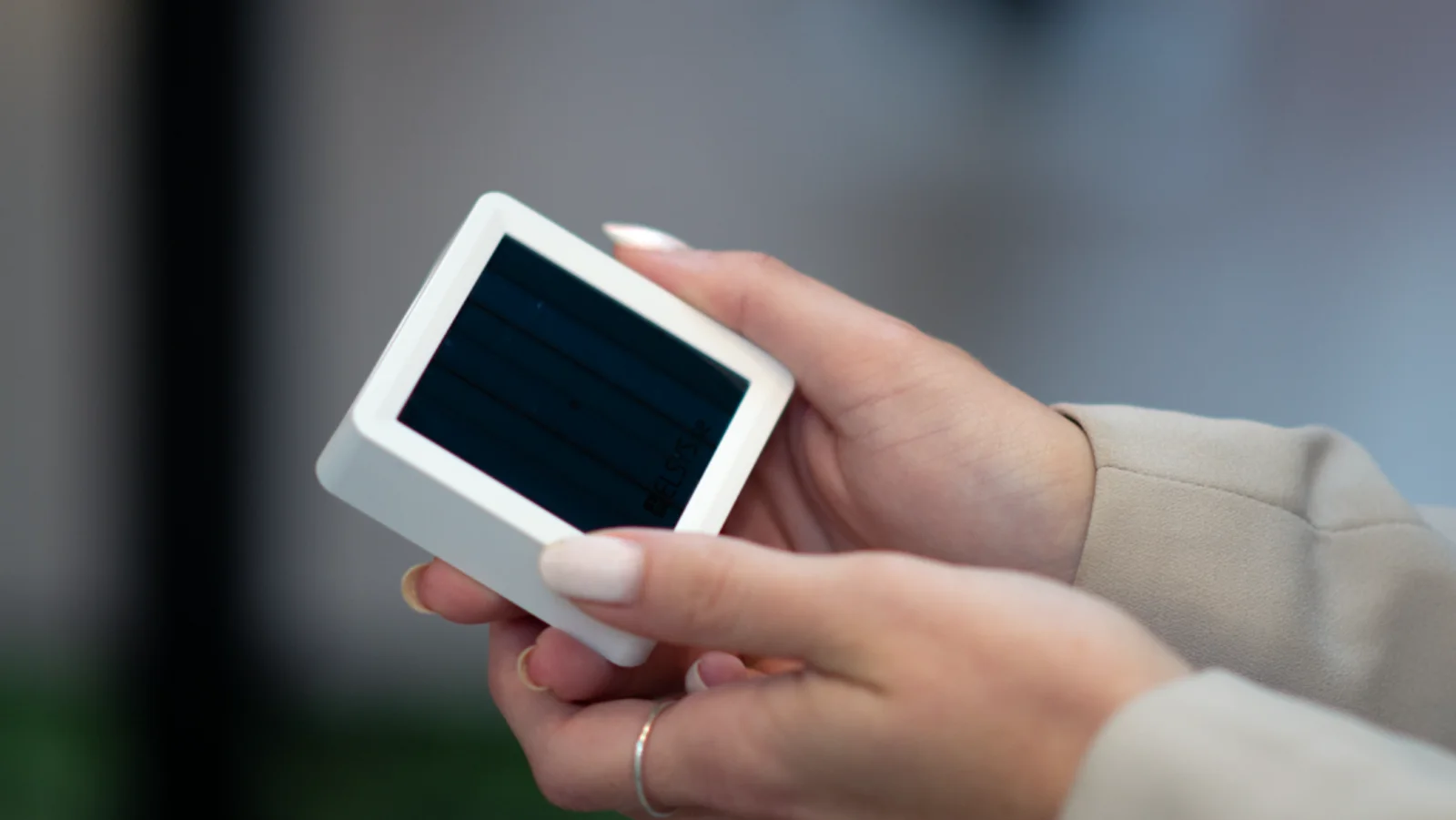
Sally R therefore installed sensors powered by indoor solar cells in a shopping centre south of Stockholm, working with sensor supplier ELSYS and solar-cell manufacturer Epishine. The aim was to investigate how the technology worked under real operating conditions. About the partnership.
Indoor light powers the sensors
The sensors measure temperature, humidity and carbon dioxide levels. The solar cells capture indoor light, and the energy is stored so that the sensors can also operate when the lights are off. How long the energy lasts depends on factors including lighting conditions and the measurement and transmission settings. ELSYS technical documentation.
Both types were installed in the same building
The trial included 200 battery-powered sensors and just over ten sensors powered by indoor solar cells in a 100,000-square-metre shopping centre. They were installed alongside each other for comparison. Netmore provided the network connection via LoRaWAN.
For the property owner, the potential benefit is obtaining the measurements needed to operate the building with fewer batteries to buy, replace and dispose of.