1. Do you know what conditions are like in the spaces people use?
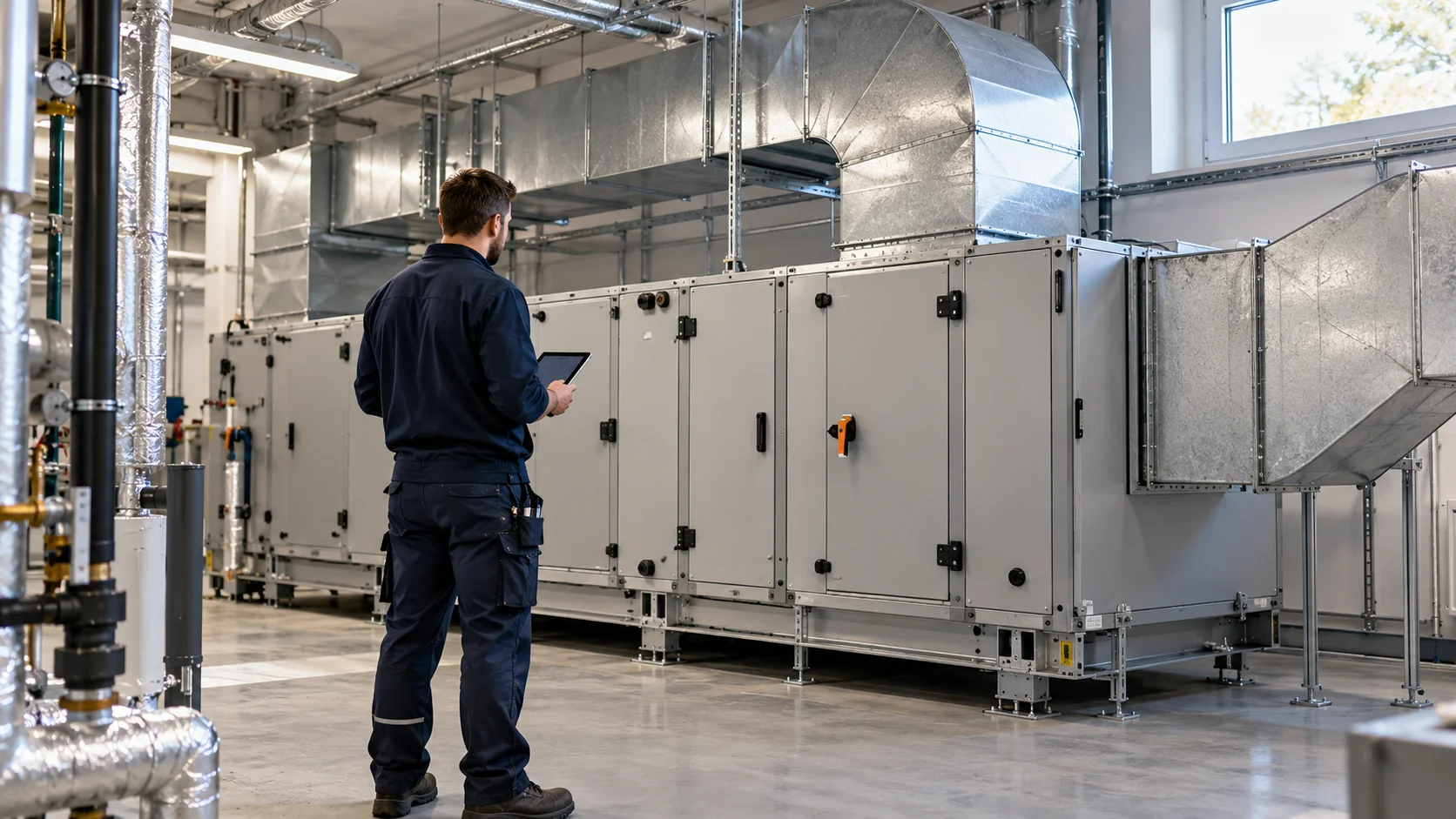
Readings from an air-handling unit tell you how the unit is operating. Conditions inside the rooms also need to be monitored.
Ask which rooms are monitored and how temperatures and air quality vary when those spaces are in use. A meeting room may have different requirements from an open-plan office. The measurements need to provide a sufficiently representative picture of the spaces the ventilation system serves.
2. Does ventilation adapt when demand changes?
If airflow stays the same throughout operating hours, the system may supply more ventilation than is needed for parts of the day. This uses fan energy and can also increase the energy needed to heat or cool the air.
Ask what actually influences the controls. Is it only a schedule, or are measurements from the rooms also used? The Swedish Energy Agency identifies demand control based on factors such as time, temperature and carbon dioxide levels as a way to make ventilation more energy efficient. Swedish Energy Agency guidance (in Swedish).
3. Are pollutants in and around the building being addressed?
Air pollutants can come from activities inside the building, its materials and the outdoor air. The measures needed depend on the pollutant and its source.
Ask how ventilation and filtration have been adapted to the building’s circumstances. Some activities also require pollutants to be captured close to their source. Measurements help you understand the conditions, but need to be followed by appropriate action. Boverket’s information on air and ventilation (in Swedish).
4. How much time is spent on recurring adjustments?
The operations team’s experience says a lot about how the controls work day to day. Do the same temperatures and airflows need adjusting again and again? Have temporary fixes become permanent?
Recurring work can reveal where the controls need to be better adapted. Automation can reduce the need for some manual adjustments. The operations team still needs to understand the changes, monitor the results and intervene when necessary.
5. Can you relate tenants’ experiences to system operation?
When someone finds a room too hot, cold or stuffy, the operations team needs to be able to investigate what was happening at that time.
Ask whether room temperatures and relevant air-quality readings can be tracked alongside system operation. This makes it easier to identify recurring problems and check whether an adjustment helped. The tenant’s experience is an important part of that follow-up.
6. Can you use the same approach across several buildings?
For anyone responsible for a portfolio, monitoring becomes time-consuming if each building requires a different approach. Shared methods for measurement, control and follow-up can make it easier to spot issues and prioritise work.
Ask how a solution can be used in more buildings and what needs adapting at each installation. Existing control systems, available measurements and the ability to adjust setpoints need to be assessed for each property.
What the answers should tell you
The answers should give you a picture of how well ventilation serves the activities in the building, what takes up the operations team’s time and where energy is being used unnecessarily.
Sally R uses building measurements to continually adapt airflow and temperature setpoints through the existing control system. The work starts with understanding the building and the improvements that are possible there.